Leveraging the Revolutionary FAR Overhaul (RFO)
On November 3rd, Jeff Koses, the General Service Administration’s (GSA’s) Senior Procurement Executive, posted an article on LinkedIn announcing that the “RFO is in play.” The article highlighted that GSA, the U.S. Department of Agriculture, and the Department of Homeland Security had issued all the deviations with November 3rd as the effective date for the changes. A new era begins for the Federal Acquisition Regulation (FAR) as agencies and departments continue to work towards implementing the RFO deviations and updating their supplemental acquisition regulations. The procurement policy teams responsible for drafting the deviations, the Practitioner’s Albums, and the FAR Companion deserve praise for the thoughtful, integrated, and comprehensive effort. The streamlined RFO is an improvement on the FAR, providing a clear, concise, and coherent acquisition framework for government and industry.
As we know, the next phase of the process, the public rulemaking, is critical to the long-term success of the RFO. The rule making process provides the public, including key stakeholders across the procurement community, with the formal opportunity, consistent with law, to comment on the deviations in the form of proposed or interim rules. A robust, transparent process will ensure that the deviations become final rules, cementing the RFO. The Coalition for Common Sense in Government Procurement’s members look forward to the start of the public rule making phase and the opportunity to formally comment on the revised FAR.
The RFO is central to improving the efficiency and effectiveness of the procurement system. The FAR establishes the ground rules for government and industry transacting business in support of agency missions. The RFO streamlines and clarifies the ground rules thereby increasing competition and access to the commercial market.
Leveraging the RFO to deliver best value mission support for customer agencies and the American people centers on three critical elements: (1) requirements development (2) the acquisition workforce; and (3) operational commercial best practices.
1. Developing Sound Requirements
Clear, concise, and well communicated requirements are foundational to successful procurement outcomes that deliver best value mission support. Program offices must play a central role in developing requirements. In this regard, coordination between senior program managers and contracting officers drives effective requirements development for complex requirements. Part and parcel of requirements development is market research. Understanding the capabilities and technologies in the commercial market will inform sound requirements. Too often, government requirements reflect a “Hail Mary” approach that seeks a capability well beyond what is currently commercially available rather acquiring the 80 percent commercial solution that can meet mission needs. As with most “Hail Mary’s” these requirements often end unfulfilled and undelivered.
Finally, today’s outcome-based contracts are yesterday’s performance-based contracts. The Administration rightly has identified outcome-based requirements as a strategy that can increase competition, improve performance and achieve greater savings. The long-standing challenge of outcome-based contracting is the articulation and implementation of clear outcomes and associated measures to support contractor performance and government contract administration. It all starts with the Statement of Objectives (SOO). Management focus on and investment in outcome-based requirements development is a commercial best practice. The government should look to emulate this commercial best practice to unlock the positive potential of outcome-based contracting. Perhaps leveraging technology (e.g. Artificial Intelligence) for data analysis and analytics can support the government’s requirements development process.
2. Embracing The Acquisition Workforce
The RFO vests greater discretion to the contracting officer. Some of the commentary around the RFO has raised the potential of increased inconsistency in contracting operations due to greater discretion. The Practitioner’s Albums, FAR Companion, and Category Management Buying Guides are the starting point for the acquisition workforce. As the implementation of the RFO moves forward, translating real life experience with the revised ground rules into a set of operational best practices will be important in fostering consistency. Further, consistent, strategic investments in acquisition training and professional development will enhance sound decision making. Finally, management support and corresponding lines of authority in contracting operations will foster consistency and accountability in the process.
3. Adopting Commercial Best Practices in Procurement Operations
The hallmark of the RFO is its leveraging of the commercial market. The RFO reduces the number of clauses applicable to commercial contracts, strengthens the preference for commercial products and services, and streamlines the overall procurement process. As a policy statement, the RFO recognizes that access to, and competition from the commercial market drives innovation, efficiency, and increases value for the government mission.
Adopting commercial best practices in procurement operations is the third key element in leveraging the RFO to deliver best value mission support for the American people. For example, as mentioned above, it is a commercial best practice to invest significant time and resources in requirements development. Sound outcome-based requirements are the blueprint for success. Vigorous competition for sound requirements is the single most effective way to drive value for the taxpayer. Avoiding government-unique, noncommercial practices is the other side of the coin. Operational practices that overregulate or reregulate the procurement process will limit competition, reduce access to the commercial market, and undermine mission support. It will be incumbent at the operational level to embrace commercial best practices while avoiding/eliminating noncommercial practices that undermine the efficiency and effectiveness of the procurement process.
GSA Launches OASIS+ Phase II
GSA announced that it is launching OASIS+ Phase II, a major expansion of the program. This new phase aligns the program with Executive Order (EO) 14240, “Eliminating Waste and Saving Taxpayer Dollars by Consolidating Procurement,” and significantly broadens the range of services available to Federal agencies. Phase II adds five new service domains across all six OASIS+ solicitations, bringing the total to 13 domains.
GSA notes that this expansion reflects extensive market research, customer engagement, spend analysis, and feedback received through a June 17, 2025 Request for Information. The added domains respond to key areas of unmet or fragmented Federal demand. The new OASIS+ service domains include:
- Business Administration
- Financial Services
- Human Capital
- Marketing and Public Relations
- Social Services
GSA plans to reopen all six solicitations for continuous proposal submissions on or about January 12, 2026, consistent with its original strategy. A pre-amendment notice is expected on SAM.gov on December 16, 2025, which will include draft scorecards for all domains.
GSA Releases MAS Refresh 30
GSA has issued Refresh 30 of the Multiple Award Schedule (MAS) solicitation, incorporating several updates aligned with the Revolutionary Federal Acquisition Regulation (FAR) Overhaul (RFO) initiative. The RFO aims to streamline Federal contracting by removing unnecessary or non-statutory requirements from the FAR.
Under Refresh 30, GSA is replacing 53 clauses and provisions, adding five new ones, and eliminating 36. These revisions reflect ongoing efforts to simplify and modernize the MAS Program and support more efficient acquisition of commercial products and services.
Refresh 30 also shifts MAS ordering procedures from the FAR to the General Services Acquisition Regulation (GSAR). This change will make future updates easier to implement. In addition, GSA has revised solicitation provision SCP-FSS-001 to align with RFO-driven updates.
Draft DoD Memo Proposes Five Percent Cap on Reseller Fees
Federal News Network reports that the Department of Defense (DoD) has drafted a memo that would cap most reseller markups at five percent for information technology (IT) products sold under GSA Schedule Special Item Number (SIN) 33411. The cap would apply only to IT products purchased through the GSA Schedule Program, requiring DoD contracting officers to independently determine fair and reasonable pricing rather than rely on Schedule pricing alone.
The policy would cover a wide range of electronic equipment, including desktops, laptops, servers, storage devices, networking equipment, audio-visual hardware, and radios. It would require vendors to disclose manufacturer or dealer pricing as well as the markup applied. Any markup above five percent would trigger additional justification requirements.
The draft memo has raised questions about feasibility and legality, with stakeholders noting potential conflicts with statutory and FAR provisions regarding commercial items and cost and pricing data, as well as concerns that the approach could increase administrative burden, reduce competition, and slow procurement. The memo has not yet been finalized, and GSA’s broader review of the reseller market remains ongoing.
Don’t Miss Next Week’s Holiday Reception!
Thank You Sponsor
The Coalition invites you to join us next week on December 10 from 5:00–8:00 PM (ET) at the Tower Club in Tysons Corner, VA for a complimentary holiday reception. Come enjoy refreshments and connect with colleagues as we commemorate the year’s achievements and look ahead to what’s to come.
After an active year, this gathering offers the perfect moment to unwind, reflect, and celebrate together. We hope you can join us!
To register, click here. For assistance with registration, please contact Mady Whiting at mady.whiting@thecgp.org.
Registration is complimentary but required for food and beverage planning. Please register ASAP to assist with planning.
Unwrap Procurement Insights at the 2025-2026 Winter Training Conference!
As you plan for the year ahead and build your “wish list” of must-attend events for 2026, make sure the Coalition’s 2025–2026 Winter Training Conference: The Revolutionary Federal Market is at the top! Taking place January 14–15, 2026, at the Fairview Park Marriott in Falls Church, VA, this two-day program will kick off the new year with the insights contractors need most.
With the Administration’s second year soon to be underway, evolving policy priorities and sweeping acquisition reforms are reshaping the procurement landscape. The Winter Training Conference will bring together government leaders, policy officials, and industry experts to unpack what’s ahead in 2026 and what contractors should be preparing for now.
Attendees will also hear timely updates on the Revolutionary FAR Overhaul and the broader developments shaping the federal marketplace, such as the FY26 National Defense Authorization Act (NDAA), procurement consolidation, digital transformation and artificial intelligence (AI), and trends across the government-wide acquisition contract ecosystem.
With so much transformation underway, the Winter Training Conference offers an invaluable opportunity to start 2026 with clarity, insight, and direction.
Explore the Governmentwide Agenda (Jan. 14) here.
Explore the Healthcare Agenda (Jan.15) here.
Register today by clicking here! Please note: All existing registrations have been automatically transferred to the new dates. Should you be unable to attend in January, please contact Madyson Whiting at mwhiting@thecgp.org and we will issue a full refund upon request.
Hotel Reservations
Please use this link to secure your room in our block at the discounted rate: Book your group rate for CGP Conference
Please note: For your convenience, previously booked hotel reservations in the Coalition’s room block have been automatically transferred to the new conference dates. If you are no longer able to attend, please cancel your hotel room reservation by contacting the Fairview Park Marriott directly or on your Marriott App. There will be no penalty, and full reimbursements will be provided if you cancel your reservation within 72 hours of the new check-in date.
New Legislation Seeks Audit and Temporary Pause of 8(a) Sole-Source Awards
Senator Joni Ernst (R-IA) recently introduced legislation that would pause the award of sole-source contracts under Section 8(a) of the Small Business Act pending completion of an audit of the program. Under the proposal, new no-bid 8(a) awards would be halted until the Administration conducts and submits a comprehensive review of the program to Congress.
Senator Ernst’s announcement follows the Department of Justice’s (DOJ) disclosure earlier this year of a large-scale fraud scheme involving misuse of the 8(a) program, as well as recent reporting raising concerns about potential vulnerabilities within the program’s oversight structure.
The legislation, titled the Stop 8(a) Contracting Fraud Act, seeks to assess the extent of any misuse and evaluate safeguards intended to ensure that the program continues to support eligible small businesses.
GSA Finalizes SDVOSB and HUBZone Awards Under Polaris
Washington Technology reports that GSA has finalized awardees for two small business pools under the Polaris Government-wide IT contract vehicle, including the service-disabled veteran-owned small business (SDVOSB) pool and the HUBZone pool. The final lists reflect several changes from the “apparently successful” awardees announced in August, with four firms removed from the SDVOSB pool and two firms removed from the HUBZone pool following eligibility challenges.
In total, 23 of the 251 SDVOSB applicants received awards, and 30 of the 180 HUBZone applicants were selected. GSA noted that these awards represent Phase One of Polaris and that companies may still be eligible for future phases.
Final awards for the women-owned small business and general small business pools are still pending. Polaris is a ten-year contract vehicle designed to support agency acquisition of emerging technologies and IT solutions, including AI, automation, immersive technology, distributed ledger tools, and edge computing.
Senate Appropriators Propose $5M for TMF as Sunset Date Nears
MeriTalk reports that the Senate’s draft Fiscal Year (FY) 2026 Financial Services and General Government (FSGG) appropriations bill includes $5 million for GSA’s Technology Modernization Fund (TMF). The TMF provides agencies with resources and guidance to support major IT modernization projects, with savings from funded initiatives intended to replenish the fund over time.
The Senate’s proposal contrasts with the House’s version of the FY26 FSGG bill, which includes no appropriations for the TMF. The TMF is only authorized through December 12, 2025. Earlier this year, GSA highlighted the importance of repayment by implementing a structure that allows agencies to transfer or reimburse up to $100 million annually beginning in FY26, though the scale of expected repayments remains unclear.
Separate from the appropriations process, Congress is considering longer-term TMF reauthorization. The bipartisan Modernizing Government Technology Reform Act, introduced in April, would extend TMF authority for seven years and introduce additional oversight tools, including the creation of a Federal Legacy IT Inventory.
The Center for Procurement Advocacy (CPA) has called on Congress to reauthorize the TMF. “Reauthorizing the TMF is not just good policy – it is essential for national security, fiscal responsibility, and public trust,” Timothy Cook, CPA Executive Director, said in a statement.
There’s Still Time! Secure Your Sponsorship Now for the 2025-2026 Winter Training Conference
There is still time to secure your company’s sponsorship for the 2025-2026 Winter Training Conference: The Revolutionary Federal Market!
Sponsoring the Coalition’s conference provides outstanding brand visibility and the opportunity to demonstrate thought leadership before a highly engaged audience of procurement professionals and Federal Government officials.
Sponsorship of the Coalition’s flagship event provides your organization with many benefits, including:
- Establishing your company as a leader in the industry;
- Demonstrating your thought leadership to a highly engaged audience of procurement professionals and Federal Government officials;
- Associating your company with a well-known event;
- Promoting your company’s brand;
- Reaching new audiences;
- Generating quality leads;
- Showcasing your products and services; and
- Networking and establishing new relationships.
To learn more, view the Sponsorship Prospectus.
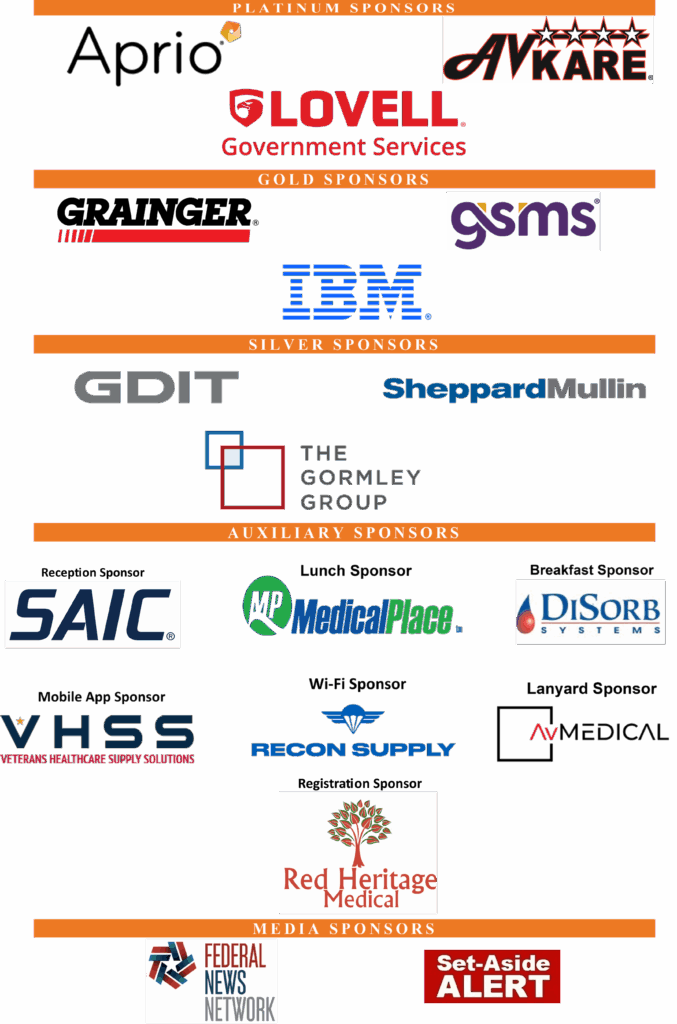
Thank you to our current sponsors!
Ready for January? Start Planning in the Conference App
The mobile app for the Coalition’s 2025-2026 Winter Training Conference is available for registrants.
If you have already registered for the conference, simply follow these instructions to download the app and log in. All registrants will also receive an email next week with the instructions on how to access the app. If you have not yet registered for the Winter Training Conference, be sure to reserve your spot here! All future registrants will receive app instructions within one business day.
By logging in today, you will be able to:
- Set up your profile and begin networking with other attendees before the conference kicks off.
- Submit questions for speakers ahead of time, helping shape the information and conversations you want to hear.
- Personalize your agenda to make sure you don’t miss the sessions most important to you.
- Stay in the loop with real-time conference announcements and updates delivered directly through the app.
Special thank you to our Conference App Sponsor, Veterans Healthcare Supply Solutions, for enhancing the conference experience for everyone at the event through the app.
White House Launches National AI Initiative Under “Genesis Mission”
A November 24 Executive Order (EO), “Launching the Genesis Mission,” directs the development of an integrated AI platform designed to leverage Federal scientific data to create advanced AI models and agents. The Department of Energy (DOE), in coordination with the Assistant to the President for Science and Technology, is charged with leading this effort.
Under the EO, DOE must establish an “American Science and Security Platform” that links Federal scientific data, cutting-edge AI models, and computational tools to support research institutions, industry partners, and U.S. manufacturers. The Energy Secretary is also directed to identify at least 20 science and technology challenges of national importance, which the new platform will be tasked with addressing. The EO further requires annual reporting on the platform’s progress and performance.
OPM Guides Agencies to Reevaluate Senior-Level Staffing
Federal News Network reports that the Office of Personnel Management (OPM) is urging agencies to reassess and potentially reduce their senior-level staffing in response to significant Federal workforce cuts under the Trump Administration. An OPM memo released on November 14 directs agencies to submit a detailed assessment of their current allocations for Senior Executive Service, Senior Level, and Scientific/Professional positions, including any planned reductions, by December 19. OPM says these reviews are essential given governmentwide workforce reductions, restructuring, and the need to align leadership roles with the White House’s priorities.
This directive builds on an October 15 EO requiring agencies to establish “strategic hiring committees” to ensure any hiring aligns with the Administration’s goals. Although the Administration has already exceeded its overall target for shrinking the Federal workforce, it is simultaneously expanding agencies’ flexibility to hire politically appointed leaders through the new Schedule G classification. OPM has also rolled out new training and revamped performance standards to ensure senior executives prioritize and implement the President’s workforce and policy objectives, including tighter limits on how many executives can be rated as top performers.
GSA Announces OneGov Agreement with SAP
GSA announced a new OneGov agreement with SAP that provides Federal agencies with discounts of up to 80 percent on SAP’s database, analytics, integration, and cloud tools. The deal is expected to save an estimated $165 million and supports ongoing Federal IT modernization efforts, including the White House’s AI Action Plan.
Over the next 18 months, agencies can access an 80 percent discount on license-based products, 35 percent discount on cloud services, and other benefits such as modernization credits, waived data egress fees, and dedicated SAP architectural support. The agreement is available to existing SAP customers for renewals, expansions, and modernization projects.
GSA and SAP leaders say the agreement will streamline procurement, improve interoperability, and accelerate the adoption of AI-enabled capabilities across the Federal Government.
GSA Announces OneGov Agreement with Palo Alto Networks
GSA announced a new OneGov agreement with Palo Alto Networks that provides Federal agencies with discounted pricing on a suite of AI-driven and cloud-based cybersecurity solutions through January 31, 2028. The agreement offers access to capabilities aimed at protecting critical Federal networks as agencies accelerate adoption of AI and modernize their cybersecurity infrastructures.
According to GSA, the agreement includes significant discounts on three key offerings:
- A 60 percent discount on designated bundles of Prisma AIRS Runtime Security and VM-Series Software Firewalls, with additional savings on Panorama and Cloud Delivered Security Services.
- A 60 percent discount on Zero Trust access solutions supporting secure connectivity from any device or location.
- A 35 percent discount on Palo Alto Networks’ Code to Cloud platform, offering full lifecycle application security and visibility across multi-cloud environments.
GSA’s Federal Acquisition Service Commissioner, Josh Gruenbaum, highlighted the agreement as a key step in supporting the Administration’s push to accelerate AI adoption while ensuring strong cyber protections across the government. Palo Alto Networks leadership emphasized that the partnership gives agencies modern security tools designed to keep pace with evolving cyber threats.
Register for the Small Business Summit! Jan. 13
On January 13, the Coalition will host its third annual Small Business Summit, a half-day forum featuring key insights and analyses into the latest developments regarding small business policy, subcontracting, teaming, joint venture agreements, and more.
The program will consist of valuable sessions featuring experts from government and industry, and the chance to network with peers in the procurement community. The Summit is an excellent opportunity for both small and large businesses to increase their knowledge about small business policy and what makes for a successful, sound business relationship.
Small Business Administration (SBA) Regulatory Update
John Klein, SBA Deputy General Counsel, will provide a Regulatory Update, giving key insights into recent and upcoming regulatory changes impacting small businesses. Attendees will be informed on the latest SBA policies and how they affect compliance and opportunities in federal contracting.
Small Business Subcontracting
The Summit also features a panel on small business subcontracting, with perspectives and insights from large and small businesses.
SBA Policies and Programs Update
Finally, there will be an update on the latest SBA government contracting programs and policies.
This event is complimentary to all Coalition members, and both in-person and virtual attendance are available! Register here. For any assistance, please contact Madison Whiting at mady.whiting@thecgp.org.
Legal Corner: CMMC Regulations: Key Questions and Answers for Defense Contractors
The Legal Corner provides the procurement community with an opportunity to share insights and comments on Legal issues of the day. The comments herein do not necessarily reflect the views of The Coalition for Common Sense in Government Procurement.
Authored by Christian B. Nagel | David S. Black | Amy L. Fuentes | Holly A. Roth; Holland & Knight
On Nov. 10, 2025, the long-awaited final rule amending the Defense Federal Acquisition Regulation Supplement (DFARS) to implement the Cybersecurity Maturity Model Certification (CMMC) program became effective. This rule, discussed in a previous Holland & Knight alert (see link below), fundamentally changes how cybersecurity requirements are incorporated into U.S. Department of Defense (DOD) contracts and subcontracts.
What does this mean for defense contractors? Below are the most common questions asked and responses from Holland & Knight’s Government Contracts Group:
- Is CMMC real now?
Yes. The final DFARS rule indicates that CMMC requirements will be added to select DOD solicitations starting Nov. 10, 2025.
- What new cybersecurity obligations does CMMC impose?
None. Generally speaking, CMMC imposes new assessment or certification requirements for cybersecurity obligations that had already been imposed in defense contracts and/or by previously published government standards.
- So, what changed on Nov. 10?
The new obligations will be the level of verification required by contractors to demonstrate they meet the preexisting cybersecurity obligations.
- How will CMMC be implemented?
The requirements will be imposed through the clauses prescribed for applicable DOD1 solicitations and contracts. The acquisition of commercially available off-the-shelf (COTS) items is excepted from the requirement. In particular, every DOD solicitation and contract that requires the processing, storage, or transmission of Federal Contract Information (FCI) or Controlled Unclassified Information (CUI) will now specify the exact CMMC level required for the contractor’s information systems.
- What levels of CMMC will be required?
The CMMC level is determined by the program office or requiring activity based on the sensitivity of the information and the risk profile of the contract:
- Level 1: FCI. Contractors must perform an annual self-assessment against the Level 1 requirements and post the results in the Supplier Performance Risk System (SPRS).
- Level 2: Controlled Unclassified Information (CUI). In Accordance with (IAW) DFARS – 7012
- Self-assessment
- Third party assessors (Certified Third-Party Assessment Organization (C3PAO))
- Level 3 = National Institute of Standards and Technology (NIST) 800-173 (DOD’s Defense Industrial Base Cybersecurity Assessment Center (DIBCAC) certifies)
- What is the timing to come into compliance?
Plan of Action and Milestones (POA&Ms) must have specified end dates with a maximum amount of time before completion.
- When will the requirements be imposed?
Requirements will begin being phased into DOD contracts – starting with major programs.
- What are subcontractors’ obligations for compliance?
Subcontractors also must comply, with prime contractors being tasked to ensure flowdown and – to a degree – compliance.
Please review our previous Holland & Knight alert, which provides a more detailed analysis of the final DFARS rule and recommendations for the next steps defense contractors should consider. (See “CMMC Goes Live: New Cybersecurity Requirements for Defense Contractors,” Sept. 10, 2025).
Holland & Knight’s Government Contracts Group is prepared to assist with navigating the new requirements, developing robust compliance programs and ensuring your organization remains eligible and competitive in the evolving defense contracting environment. For tailored advice on CMMC compliance strategies, contract review or supply chain management, please reach out to the authors.
Notes
1 We continue to use the term “DOD” instead of Department of War (DOW) in accordance with currently effective regulations – including the FAR and DFARS.
Healthcare Spotlight: VA FSS Releases FY25 Q4 Newsletter
The Department of Veterans Affairs (VA) has published its FY25 Q4 Federal Supply Schedule (FSS) Newsletter. The newsletter features key updates and reminders for contractors. Highlights include:
- Mass Mods Incoming: Updated Request for Modification forms now include a new section for tariff-related price increases. An Economic Price Adjustment (EPA) clause mass mod is forthcoming.
- Chief’s Corner: FSS Chief Deborah Zuckswerth shares reflections on EO 14240, program priorities entering FY26, and continued emphasis on FSS updates and efficiency improvements.
- eSRS Reminders: Guidance on reporting timelines, agency codes, and correct submission procedures.
- GRIT Initiative: Invitation for contractors to share success stories demonstrating real-world patient impact.
- Public Law 102-585 (2026) Updates: Important dates and reminders for Federal Ceiling Price submissions.
- FY25 Program Activity: Preliminary totals include 243 awarded contracts, 92 options exercised, and 7,180 modifications completed. FSS sales reached approximately $24 billion, exceeding FY24 sales.
Off the Shelf: The Compliance Environment in GovCon
Zach Terwilliger and Alex Canizares, Partners at Vinson & Elkins, joined Off the Shelf for a wide-ranging discussion of the current compliance environment for government contractors.
During the interview, they discussed current Department of Justice priorities relating to criminal and civil enforcement and what government contractors should be focusing on.
They also provided their insights regarding the Administration’s approach to the False Claims Act (FCA), highlighting the interplay with procurement polices like Cybersecurity Maturity Model Certification (CMMC).
Finally, they shared their thoughts regarding the Administration’s Civil Rights Fraud initiative and its implications for contractors, key FCA trends, and best practices for compliance.
Listen to the full interview here.
Recording Now Available: Cyber Year in Review Webinar
The Coalition hosted a timely webinar this week providing a comprehensive overview of key Federal cybersecurity developments from the past year and their impact on government contractors. The session featured presenters Townsend Bourne, Partner at Sheppard Mullin, and Michael Gruden, Partner at Crowell & Moring.
Townsend and Michael examined the major changes across Federal cybersecurity programs over the past year, including the ongoing rollout of CMMC, heightened requirements for protecting Controlled Unclassified Information (CUI), and initiatives aimed at securing the Defense Industrial Base and Federal networks. The speakers provided practical insights on interpreting evolving standards, managing cyber risks, and aligning internal processes with increased Federal regulations.
The recording of the webinar is now available on the Member Portal. For assistance accessing the recording, please contact Mady Whiting at mady.whiting@thecgp.org.
We extend our sincere thanks to Townsend and Michael for sharing their expertise and delivering a valuable briefing on the cybersecurity landscape and what contractors should be preparing for in 2026.