Meet the First Dog Funded by Our Annual Golf Tournament!

Last year, something remarkable happened at the Coalition’s Annual Joseph P. Caggiano Memorial Charity Golf Tournament. Thanks to the incredible generosity of our members, sponsors, and attendees, we raised enough funds to fully support the training and placement of a service dog for a veteran in need through Paws for Purple Hearts.
Today, we’re checking in on Waldron, the service dog your support helped make possible. As you can see, Waldron has been busy growing, learning, and progressing through his training journey.
When the Coalition community raised enough funds at last year’s tournament to fully support the training and placement of a service dog, we knew it was a special accomplishment. What we didn’t expect was the surprise that came later. As a way of recognizing the Coalition’s support, Paws for Purple Hearts honored us by naming the service dog “Waldron” after Coalition President Roger Waldron.
Waldron recently celebrated his first birthday and has quickly become known for his larger-than-life personality. With his playful spirit and friendly personality, Waldron has a way of brightening every room he enters. He serves as a wonderful reminder of the impact our members and sponsors of our annual golf tournament can make when they come together in support of veterans.
One day, Waldron will be paired with a veteran whose life will be forever changed by the companionship, support, and assistance that a highly trained service dog can provide. That life-changing outcome was made possible because of our members. And this year, we’re hoping to do it again as we continue our goal of raising funds for another service dogs!
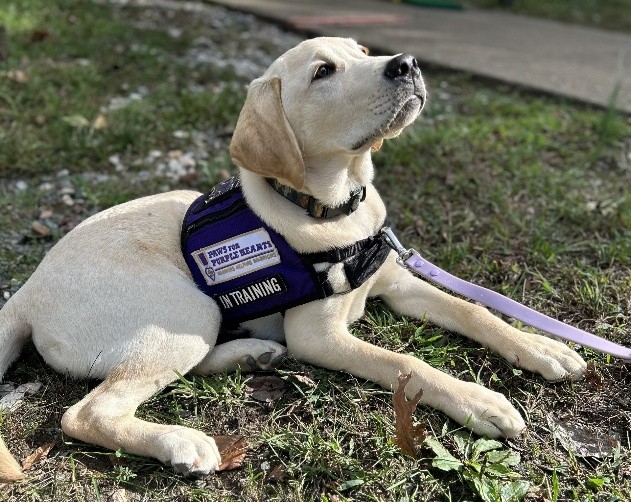
If you’d like to meet Waldron in person, you’ll have the opportunity to do so at this year’s tournament! We are excited to welcome him and celebrate the incredible impact that last year’s event made possible.
Registration is now open for the 13th Annual Joseph P. Caggiano Memorial Charity Golf Tournament on August 19, 2026 at the beautiful Whiskey Creek Golf Club in Ijamsville, Maryland. This tournament brings together industry partners in the government contracts community and friends of the Coalition for a day of golf, networking, and friendly competition. More importantly, it brings our community together in support of two causes that are making a real difference in the lives of veterans.
Proceeds from this year’s tournament will once again benefit Paws for Purple Hearts, which improves the lives of veterans and wounded service members through assistance dogs and canine-assisted therapeutic programs. Funds also support The Coalition Endowed Scholarship Fund at The George Washington University Law School, which helps veterans pursue graduate studies in government procurement.
Because of your support, the Scholarship Fund has provided more than $150,000 in assistance to veteran students. And because of your generosity at last year’s tournament, Waldron is now on his way to becoming a service dog. Whether you register a foursome, sign up as an individual golfer, join us on the veranda, or become a sponsor, your participation directly supports these important causes.
We also offer a variety of sponsorship opportunities for organizations looking to increase their visibility while giving back to veterans. New sponsorship opportunities this year include Golf Ball Sponsor, Golf Towel Sponsor, Driving Range Sponsor, and Putting Green Sponsor, along with returning favorites such as Beverage Cart Sponsor, Longest Drive/Closest to the Pin Sponsor, and Hole Sponsor.
If you have any questions, or are ready to secure your sponsorship for the annual golf tournament, please contact Heather Tarpley at htarpley@thecgp.org.
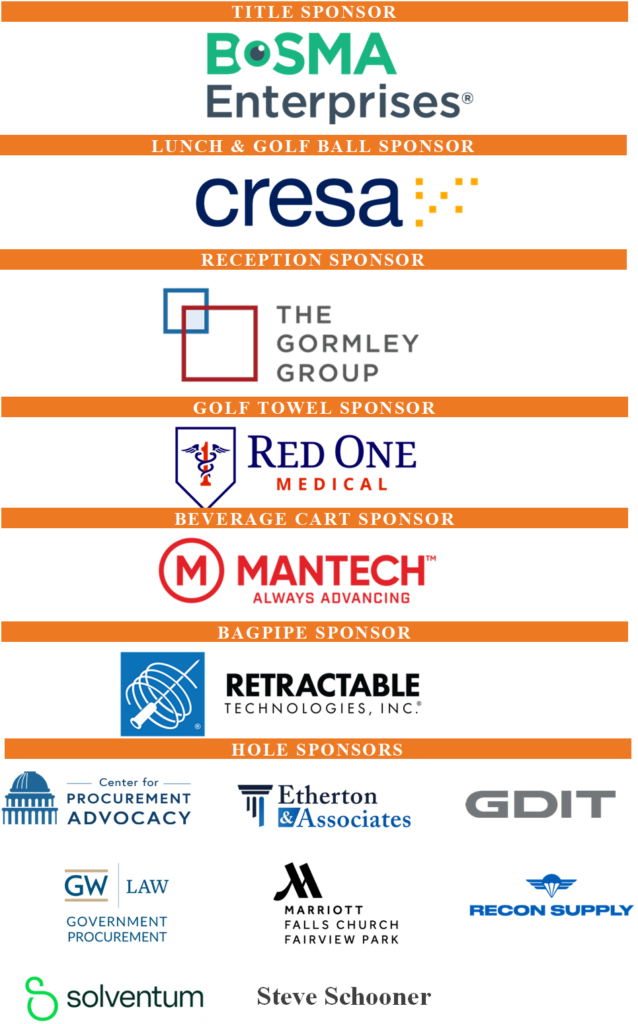
Thank you to our current sponsors!
We hope you’ll join us on August 19 and help us support even more veterans at this year’s tournament!
Take the Coalition Contract Duplication Survey
The Coalition has launched a survey on the impacts of duplicative Federal contracts. Specifically, contracts for the same or similar products or services across the government.
The purpose of the survey is to gather member feedback on the costs associated with contract duplication, including bid and proposal expenses, contract management costs, and other administrative burdens.
The Coalition will use survey responses to develop a report on the costs and prevalence of having duplicative contracts available for the same products and services across the government.
The report will be shared with government officials at GSA, the Department of War, the Office of Federal Procurement Policy (OFPP), and other agencies, who are involved in current efforts to consolidate contracting programs governmentwide. The objective of the report is to inform these Federal decision-makers about the costs of contract duplication and the urgent need to address it.
Members are encouraged to participate. Survey responses will be treated as non-attributable, and individual company information will not be shared with the Government.
Access the survey here. If you have any questions, please contact Michael Hanafin at mhanafin@thecgp.org.
TDR Grace Period for Transitioning MAS Contractors
The General Services Administration (GSA) has announced a temporary Grace Period for Multiple Award Schedule (MAS) contractors transitioning into the Transactional Data Reporting (TDR) program. The Grace Period applies to contracts entering TDR with effective dates between October 1, 2025, and July 1, 2026, as well as contracts entering the program thereafter, and will remain in effect through the reporting period ending December 31, 2026.
During the Grace Period, contractors will not be subject to penalties for TDR reporting non-compliance. GSA may, however, issue “soft flags” identifying reporting discrepancies or non-matches that contractors are expected to review and correct. According to GSA, the temporary policy is intended to provide contractors with additional time to become familiar with monthly TDR reporting requirements and address reporting issues before compliance enforcement begins.
Beginning with the reporting period effective January 1, 2027, TDR compliance will be subject to enforcement action by the Contracting Officer.
SBA Proposes Major Changes to 8(a) Business Development Program
On June 11, the Small Business Administration (SBA) issued a proposed rule that would eliminate the longstanding rebuttable presumption of social disadvantage for individually owned companies participating in the 8(a) Business Development program. If finalized, all applicants seeking admission to the program would be required to establish social disadvantage under a single standard rather than membership in a designated group.
The proposed rule includes four key changes.
- SBA would revise its regulatory definition of a socially disadvantaged individual to align with the statutory definition.
- SBA would establish a new test for demonstrating social disadvantage.
- SBA would eliminate the current non-presumptive pathway used by individuals who are not members of designated groups, making the new standard the sole method for establishing social disadvantage.
- SBA would remove the process for adding groups to the rebuttable presumption list, as the presumption itself would be eliminated.
According to SBA, the new standard would allow individuals to establish social disadvantage by demonstrating that they experienced material harm resulting from discrimination directed at their racial, ethnic, or cultural group.
Comments on the proposed rule are due July 13, 2026.
HHS to Sunset NITAAC GWACs
According to reports, prime contractors on National Institutes of Health (NIH) Information Technology Acquisition and Assessment Center (NITAAC) Government-Wide Acquisition Contracts (GWACs) have received formal notification regarding the sunset of the Chief Information Officer-Solutions and Partners 3 (CIO-SP3), CIO-SP3 Small Business, and Chief Information Officer-Commodities and Solutions (CIO-CS) contract vehicles.
Under the plan, all three GWACs will stop awarding new orders after October 29, 2026, following a strategic review conducted pursuant to Executive Order 14240 and OMB Memorandum M-25-31. Beginning June 8, 2026, new orders may not include periods of performance extending beyond December 31, 2028.
The Department of Health and Human Services (HHS) will continue winding down NITAAC operations through the end of 2028, with future requirements expected to transition to existing GSA contract vehicles and other established procurement channels.
GSA Opens Applications for New Grants Management SIN
The Grants Management Special Item Number (SIN) application is now open through the GSA Multiple Award Schedule. Developed through a partnership between Department of Health and Human Services (HHS) and GSA, the new Grants Management SIN, 518210GM, provides a governmentwide acquisition vehicle for grants management solutions and services.
According to HHS and GSA, offerings under the SIN must meet Grants QSMO-defined capabilities and adhere to governmentwide grants data standards, supporting greater interoperability, visibility into grants data, and standardization across federal grantmaking programs.
The SIN will also be available through GSA’s Cooperative Purchasing Program, extending access to eligible state, local, tribal, and non-governmental organizations.
Vendors offering grants management solutions and services can now apply through the MAS to position their offerings within this new governmentwide procurement channel.
VA Projects Faster Prosthetics Delivery Following Acquisition Reform
The Department of Veterans Affairs (VA) recently announced that it expects to reduce average prosthetic limb delivery times by more than 40 percent following procurement reforms implemented by VA Secretary Doug Collins.
On April 22, Secretary Collins exempted approximately 95 percent of prosthetic limb orders from contracting officer reviews and authorized local purchasing agents to buy directly from local suppliers when prosthetic limb prices are set by Medicare. Under the new policy, only the most expensive prosthetic limb purchases will continue to require contracting officer approval.
According to the VA, these changes have already reduced average delivery times from 94 days to 84 days, with wait times expected to fall further to approximately 54 days as the new process is fully implemented nationwide.
VA Committees Introduce Comprehensive Veterans Bill
On June 10, U.S. Senator Jerry Moran (R-Kan.) and U.S. Representative Mike Bost (R-Ill.) – chairmen of the Senate and House Committees on Veterans’ Affairs – released a comprehensive legislative package called the Take Care of America’s Veterans Act (HR 9237). According to Chairman Moran, the bill “provides comprehensive reforms to improve health care and benefits for thousands of veterans, their families and survivors.” It includes the Major Richard Star Act and over 60 bipartisan bills that improve access to healthcare and the VA disability benefits system. Two sections of note included in the comprehensive package seek to 1) improve access to prosthetics and rehabilitative items (see Section 316) and 2) to reform the VA’s acquisition organization (see Section 403). Both were formerly stand-alone bills. The Coalition will be monitoring the progress of the legislation and update members on developments in the Friday Flash.
GSA Administrator Envisions Single Portal for Accessing Federal Services
MeriTalk reports that GSA Administrator Edward C. Forst outlined a vision for a unified government portal that would allow citizens to access federal services through a single entry point. Speaking at an event, Administrator Forst said that the effort would build on Login.gov and help simplify interactions with the Federal government by providing a more streamlined and consistent user experience across agencies.
Administrator Forst also highlighted GSA’s role as a governmentwide shared-services provider and emphasized the agency’s leadership in supporting the adoption of AI across civilian agencies. He stated that GSA is approaching a milestone of one million hours saved through AI-enabled efficiencies and is increasingly focused on measuring the long-term outcomes of AI investments in addition to productivity gains.
During his remarks, Administrator Forst encouraged agencies to view AI and emerging technologies as long-term strategic investments. He also emphasized the importance of planning for future mission needs rather than simply modernizing legacy systems. He noted that GSA is focused on helping agencies prepare for future requirements through technology, shared services, and collaboration with industry.
VA Electronic Health Record System Goes Live at Four More Sites
Federal News Network reports that the VA has continued the deployment of its Electronic Health Record (EHR) system. On June 6, the VA deployed the system to four additional sites in Ohio and Kentucky—the Cincinnati, Chillicothe, and Dayton VA Medical Centers, as well as the Cincinnati VA Medical Center–Fort Thomas. According to the VA, the latest deployment brings an additional 7,200 employees and 107,000 veterans onto the new system.
The rollout follows the deployment of the EHR system at four VA medical facilities in Michigan earlier this year which was the first implementation since deployments were paused in 2023 to address system performance and functionality concerns.
Looking ahead, in August the VA plans to deploy the EHR system at three medical facilities in Indiana, followed by deployments in October at VA medical centers in Cleveland, Ohio, and Anchorage, Alaska. The department currently expects to complete the nationwide rollout by 2031.
VA Seeks Input on Enterprise Cloud Brokerage Service
The VA has issued a request for information (RFI) seeking industry input on a potential Enterprise Cloud Brokerage Service contract. The proposed solution would help streamline cloud credit procurement, support multi-cloud operations, and automate financial management, provisioning, and governance activities across the VA Enterprise Cloud environment.
According to the RFI, the initiative is intended to improve visibility into cloud spending, strengthen governance, and accelerate cloud acquisition processes. Responses are due June 22.
GSA Headquarters to House OPM
GSA announced that the House Transportation & Infrastructure Committee has approved full funding for the renovation of its headquarters at 1800 F Street NW. The project will modernize the historic building and create a shared workspace for GSA and the Office of Personnel Management (OPM). During the renovation, GSA will temporarily relocate to the Theodore Roosevelt Building alongside OPM.
Upon completion in December 2028, both agencies will move into the redesigned facility, which GSA says will serve as a model for efficient space utilization, improved taxpayer value, and responsible federal real estate management.
CISA Prepares AI Initiatives Under New Executive Order
MeriTalk reports that the Cybersecurity and Infrastructure Security Agency (CISA) is preparing several initiatives to implement the Administration’s new artificial intelligence (AI) executive order (EO), including expanded access to AI platforms for federal agencies and new directives focused on vulnerability management and remediation. Acting CISA Director Nick Andersen said the agency will play a central role in securing advanced AI models, leveraging AI to strengthen cyber defenses, and helping organizations address AI governance and data-related risks. Andersen also emphasized the EO’s broader goal of reducing cyber risk and modernizing aging government technology, with additional guidance expected in the coming weeks.
Are You Prepared for the New DEI Clause?
The July 24, 2026 deadline for incorporating FAR clause 52.222-90 into existing federal contracts is quickly approaching. While implementation and legal challenges surrounding the clause continue to evolve, contractors should prepare for and understand the new requirements.
Effective April 24, 2026, the FAR Council directed federal agencies to include FAR 52.222-90, Representation Regarding Certain Diversity, Equity, and Inclusion Practices, in all new solicitations and resulting contracts. Agencies are also required to modify existing contracts to incorporate the clause no later than July 24, 2026.
The clause implements Executive Order 14398, Addressing DEI Discrimination by Federal Contractors, and includes the following key provisions:
- Requires contractors to:
- Certify that they do not operate programs that engage in unlawful racial discrimination.
- Provide full access to books, records, accounts, and other information required by the contracting agency “for purposes of ascertaining compliance with this clause.”
- Report subcontractor violations that are “known or reasonably knowable.”
- Makes that certification material to payment under the False Claims Act.
- Provides a basis for suspension or debarment in cases of noncompliance.
To help members better understand the new requirements, the Coalition recently hosted a webinar examining FAR 52.222-90 and its implementation. Members may also find additional analysis in a recent Legal Corner article by Miller & Chevalier LLP addressing the Executive Order and related developments.
Resources:
- Webinar Recording: Understanding FAR 52.222-90 and Executive Order 14398 (Sheppard Mullin)
- FAR Council Advances Trump Administration’s Anti-DEI Goals with Issuance of Model FAR Deviation (Miller & Chevalier)
Proposed NDA for Federal Employees to Cover Procurement
The Office of Personnel Management (OPM) is proposing to develop a nondisclosure agreement (NDA) for Federal employees. According to the OPM’s notice in the Federal Register, the NDA “is intended to document Federal employees’ acknowledgment of, and agreement to comply with, current legal obligations to safeguard non-public, confidential, or proprietary information, created or obtained through their official duties, while expressly preserving the right to make disclosures authorized by law.” OPM defines “confidential government information” for the NDA as:
“all non-public, confidential, or proprietary information, to include, but not be limited to, information relating to internal agency operations, personnel matters, procurement processes, or any sensitive, pre-decisional or deliberative material that is not currently publicly available and should not be disclosed under applicable law.”
The draft NDA template is posted for review here. OPM is accepting public comments on the proposed NDA within the next 30 days. They are especially interested in input from the public on the following:
- What scope of information should be covered by the NDA? Should it cover only unclassified information? How do you understand the terms confidential and confidentiality in the context of this NDA? What customization of the NDA, if any, may be necessary for agencies to ensure it covers the appropriate information?
- Does the NDA clearly communicate the types of information that would be subject to non-disclosure requirements? If not, how could OPM better describe what information can or cannot be disclosed to ensure employees have appropriate notice of their responsibilities?
- Are there other statutes to which OPM should cite in Appendix A of the NDA when describing the nondisclosure requirements applicable to individuals working for or on behalf of the Federal government?
- Do you have suggestions regarding the layout or formatting of the NDA?
- Does the Privacy Act statement in the NDA provide sufficient notice to employees of the authorities, principal purposes, routine uses, and effects of the form?
- Does the OPM/GOVT-1 system of records notice provide sufficient notice that the government-wide system of records would maintain records related to the signing of, or failure to sign, the NDA?
- What are the appropriate actions, if any, for agencies to consider taking if existing employees choose not to sign the NDA?
- What are the appropriate actions, if any, for agencies to consider taking if new employees choose not to sign the NDA?
- Does the NDA clearly communicate the potential consequences of refusal to sign the form for both existing and new employees, along with whether signing the form is voluntary or mandatory?
- What else should OPM consider with regard to the NDA??
The Coalition is interested in whether member companies would like us to submit comments to OPM on the draft NDA. Please send your feedback on whether the Coalition should submit comments, or any of the above questions, to Greg Waldron at gwaldron@thecgp.org.
Legal Corner – New DFARS Proposed Rule: What Defense Contractors Need to Know About Foreign Ownership, Control, or Influence (FOCI) Reporting Requirements
Authored by Anne Bluth Perry, Nikole Snyder, and Robert Mobley; Sheppard
On May 7, 2026, the Department of Defense (“DoD”) issued a new proposed rule—Defense Federal Acquisition Regulation Supplement: Mitigating Risks Related to Foreign Ownership, Control, or Influence (“DFARS Case 2021-D011”)—seeking to amend the DFARS to mitigate risks related to beneficial ownership or foreign ownership, control, or influence (“FOCI”) (the “Proposed Rule”). For defense contractors and subcontractors, the Proposed Rule further implements disclosure obligations, eligibility requirements, and contract performance responsibilities relating to all manner of foreign investment.
New Requirements:
The Proposed Rule introduces a series of structural changes to the DFARS regulatory framework that will directly affect “covered” contractors and subcontractors. “Covered” contractors and subcontractors are “existing or prospective contractors or subcontractors, at any tier, of the DoD with a contract or subcontract valued above $5 million.” By introducing this rule, DoD aims to amend the DFARS by creating Part 240, Information Security and Supply Chain Security, within which DoD proposes to create section 240.27X, Mitigation of Risks Related to Beneficial Ownership or Foreign Ownership, Control, or Influence.[1]
Solicitation Provision
The Proposed Rule will require a new solicitation provision, DFARS 252.240-70XX, Disclosure of Beneficial Ownership or Foreign Ownership, Control, or Influence — Representation, which will require offerors to complete a Standard Form (“SF”) 328, Certificate Pertaining to Foreign Interests, and provide supporting documents for Defense Counterintelligence and Security Agency (“DCSA”) review in the National Industrial Security System (“NISS”). These obligations had typically been confined to contractors seeking or holding a facility clearance. Now, such obligations have been expanded to capture all contractors who currently possess or are competing for a contract or subcontract above $5 million—and in some circumstances, even includes contractors selling purely commercial products and services. This provision also puts offerors on notice that if the requiring activity determines, based on input from DCSA, that FOCI or beneficial ownership poses a risk or potential risk of compromise to national security that may be mitigated, the offeror must agree at the time of award to implement a risk mitigation strategy within 90 days of award. By submitting its offer, the offeror must represent that it has submitted the SF 328 and the contact information of each beneficial owner[2] in NISS, and that the information is current, accurate, and complete.
Contract Clause
Additionally, a new contract clause, DFARS 252.240-70YY, Disclosure of Beneficial Ownership or Foreign Ownership, Control, or Influence, requires contractors to: (1) disclose to DCSA their beneficial ownership and whether they are under FOCI by submitting an updated SF 328 in NISS; and (2) update the SF 328 and supporting documents, including the contact information of each beneficial owner in NISS.
The clause further imposes important downstream obligations:
- Contractors must implement risk mitigation strategies within 90 calendar days of contract award, option exercise, modification, or the identification of risks during contract performance.
- Contractors must ensure all subcontractors awarded subcontracts exceeding $5 million have an eligible status in NISS prior to subcontract award and maintain that eligible status for the duration of subcontract performance.
- If the contractor has any changes in FOCI or beneficial ownership during performance of the contract, or if the contractor is notified of such by a subcontractor at any tier or supplier, the contractor must report the changes by submitting an updated SF 328 in NISS.
DFARS 252.240-70YY also establishes tight timeframes for mid-performance reporting:
- Within 3 business days from the date of identification or notification of a change that may place the contractor or subcontractor under FOCI, the contractor must report the foreign owner’s or beneficial owner’s name, relevant information about that person, and any readily available information about risk mitigation actions undertaken or recommended.
- Within 10 business days of being notified by DCSA that FOCI or beneficial ownership poses a risk or potential risk of compromise to national security, the contractor must initiate a plan of action to implement DCSA’s recommendations, submit additional information, describe any risk mitigation efforts undertaken to date, and confirm in NISS that it will comply with the identified risk mitigation recommendations.
The new procedures direct government contracting officers not to award or modify a contract, or exercise an option unless the offeror or contractor has a status of eligible in the NISS, available at https://niss.dcsa.mil/.
Practical Impacts:
For those contractors who hold facility clearances, the requirement to complete and update the SF 328 already generally applies. But for contractors who have not sought or obtained a facility clearance, this will likely be a new process, and one that is fairly complicated.
Of course, there are aspects of the Proposed Rule that seem to exceed the existing obligations even on companies with facility clearances. For example, under the Proposed Rule, contractors are required to update the SF 328 when there are “any changes in FOCI or beneficial ownership” and must certify that the SF 328 is “current, accurate, and complete” on the date proposals are submitted. There is no limitation on what constitutes a “change” that must be reported. For example, it is not limited to “material” changes.
Further, for companies not currently under FOCI mitigation, the risk mitigation strategies have to be implemented within 90 days of contract award, contract modification, or option exercise. Typically, such risk mitigation plans are proposed by contractors and approved by DCSA in advance of implementation. This process often takes multiple months itself, so it is unclear whether contractors can comply with the 90-day obligation, unless DCSA approval of the risk mitigation plan is quickly forthcoming upon the identification of FOCI—a timeline and internal government process over which contractors have no control.
Commercial Products and Services Providers
The Proposed Rule does not automatically apply to commercial products and services, unless the designated senior DoD official[3] determines that the contract involves a risk or potential risk to national security or potential compromise because of sensitive data, systems, or processes. However, contractors should not read this exemption as a safe harbor as it is currently unknown what criteria will be used to determine whether the contract involves a risk or potential risk to national security because of sensitive data, systems, or processes.
Flowdown Requirements
Finally, prime contractors must insert the substance of the new clause, including the flow-down obligation itself, in subcontracts and other contractual instruments that exceed $5 million. This means prime contractors will bear responsibility for ensuring that their entire supply chain is compliant, representing a significant new supply chain management burden and one that could cause significant performance delays.
Timeline of Changes:
| Milestone | Date / Timeframe |
| Proposed Rule Published in Federal Register | May 7, 2026 |
| Public Comment Period Closes | July 6, 2026 [4] |
| Final Rule (anticipated) | To be determined following public comment review |
Key Takeaways for Defense Contractors:
Entities that hold or intend to pursue DoD contracts valued above $5 million should begin assessing NISS eligibility status, reviewing beneficial ownership and FOCI disclosure posture, and evaluating their supply chain for subcontractor compliance obligations. Engaging experienced government contracts counsel during the comment period is also advisable to ensure your organization’s interests are properly represented.
*Robert Mobley is a law clerk in the firm’s Washington, D.C. office.
FOOTNOTES
[1] This will implement paragraphs (b)(2)(A), (b)(2)(C), and (c)(1) of section 847 of the NDAA for FY 2020, paragraph (c)(2) of section 819 of the NDAA for FY 2021, and elements of DoD Instruction 5205.87.
[2] “Beneficial Owner” is defined in 17 C.F.R. 240.13d-3, and includes “any person who, directly or indirectly, through any contract, arrangement, understanding, relationship, or otherwise has or shares: (1) Voting power which includes the power to vote, or to direct the voting of, such security; and/or, (2) Investment power which includes the power to dispose, or to direct the disposition of, such security.”
[3] The Proposed Rule states, “The term ‘designated senior DoD official’ is used in this proposed rule as a placeholder.”
[4] Comments on the proposed rule must be submitted in writing on or before July 6, 2026, to be considered in the formation of a final rule.
Off The Shelf: The Current Government Contracting Environment
Luke Levasseur and Keeley McCarty, Partners at Fox Rothschild, joined Off the Shelf to discuss current developments in government contracts compliance, bid protests, and regulatory policy.
During the interview, Levasseur and McCarty share insights on the possible implications of the new diversity, equity, and inclusion (DEI) clause, while analyzing the similarities and differences between the Trump Administration’s DEI initiative and the Civil False Claims Act.
They also cover recent bid protest developments, the FY2026 NDAA’s proposed “loser pays” provision, and initial reactions to the RFO.
Listen to the full interview here.
GSA Hosting FAST 2026 Virtual Acquisition Summit
GSA invites industry to register for the FAST GSA 2026 Virtual Acquisition Summit for Industry. FAST 2026 is a virtual event focused on strengthening partnerships between GSA and industry through expert insights, education, and direct engagement with acquisition leaders.
Date: June 16, 2026
Time: 9 a.m.–Noon ET and 1 p.m.–4 p.m. ET
CLPs: Not offered for this event
As the federal acquisition environment continues to change, this event will help industry partners stay informed, adapt to new requirements, and strengthen their position in the federal marketplace.
The FAST GSA 2026 Virtual Acquisition Summit offers a prime opportunity to:
- Gain expert insights into major Administration initiatives, including the Revolutionary FAR Overhaul, Procurement Consolidation, and Multiple Award Schedule reform.
- Strengthen your understanding of evolving GSA and FAS acquisition processes, policies, and procedures.
- Participate in interactive discussions and Q&A sessions with GSA experts.
- Learn how to better align your offerings with changing government requirements and acquisition priorities.
- Build stronger, more strategic partnerships with GSA and the broader federal acquisition community.
Latest MAS Developments, Compliance Updates & Best Practice, June 23
Please join us for an all-member meeting hosted by IT/Services Committee on June 23 from 10:00 -11:00 AM (ET). The Gormley Group’s Sean Nulty, Managing Principal Consultant, and Sonia Pesantes, Vice President of Consulting, will provide an update on the latest developments and trends within GSA’s Multiple Award Schedule (MAS) program, including the following topics:
- Know Your Contract Terms and Conditions
- Compliance Essentials for Maintaining MAS Contract
- Best Practices for Navigating GSA
- Impact of Recent Changes on the MAS Program
The meeting will take place at CGI Federal Ballston Innovation Center: 1000 N Glebe Road, Arlington, VA 22201. Virtual attendance is also available.
To register, click here. Note: This is a members-only event. If you see a message that says “Registration Not Available” please log in using your member account.