Spring Training Conference Preview: The Revolutionary Federal Market Continued
Registration is now open for the Coalition for Common Sense in Government Procurement’s 2026 Spring Training Conference, taking place May 13–14 at the Fairview Marriott in Falls Church, Virginia. The Spring event continues the conversation from January’s Winter Training Conference, focusing on what’s next in the Revolutionary Federal Market.
As agencies advance new priorities and acquisition policies, the Spring Training Conference will provide timely insights into how the federal market is evolving and what it means for government and industry stakeholders. The full agenda will be released soon, but this year’s program will center on two key themes impacting the federal procurement landscape.
Day One: The New GSA for the Federal Market
The first day will focus on how the General Services Administration (GSA) is positioning itself to support the federal mission moving forward, consistent with the Administration’s priorities. Sessions will explore how GSA is adapting its approach to acquisition, enhancing coordination across government, and strengthening its role as a central partner in delivering mission outcomes. Attendees will gain insight into how these developments may impact contracting strategies, compliance expectations, and engagement with GSA going forward. The agenda will also include panels and speakers from other federal agencies and industry to discuss governmentwide acquisition priorities.
Day Two: The Evolving Federal Healthcare Market
The second day will turn to the federal healthcare market, with a focus on key agency priorities and developments across the Department of Veterans Affairs (VA), the Department of Health and Human Services (HHS), the Defense Logistics Agency (DLA), the Indian Health Service (IHS), and more. Sessions will examine how healthcare acquisition priorities are shifting, along with the implications for contractors supporting these critical missions.
Register Today!
Across both days, attendees will hear directly from key government decision-makers and industry experts on emerging acquisition strategies, policy developments, and market trends.
Stay tuned for the full agenda and additional speaker announcements in the coming weeks! In the meantime, we encourage you to register today to secure your spot at this important event.
To register for the Spring Training Conference, click here. For assistance with registration, please contact Mady Whiting at mady.whiting@thecgp.org.
Hotel Reservations
Please use this link to secure your room in our block at the discounted rate before April 27, 2026: Book your group rate for CGP Spring Training Conference
Be Part of the 2026 Spring Training Conference: Sponsorship Opportunities Available
Sponsorship packages are still available for the Spring Training Conference!
Sponsoring the conference provides a unique opportunity to showcase your organization to federal procurement leaders and key industry stakeholders. With attendees from across government and industry, sponsors gain valuable visibility and direct engagement with the decision-makers shaping today’s federal marketplace.
From event promotions and on-site recognition to networking opportunities with senior acquisition leaders, sponsorship helps position your organization at the center of the federal procurement community. Join leading organizations across the federal procurement community as sponsors of this premier event!
Availability is limited and offered on a first-come, first-served basis.
View the opportunities here and secure your sponsorship today! If you have any questions, or are ready to secure your sponsorship, please contact Heather Tarpley at htarpley@thecgp.org.
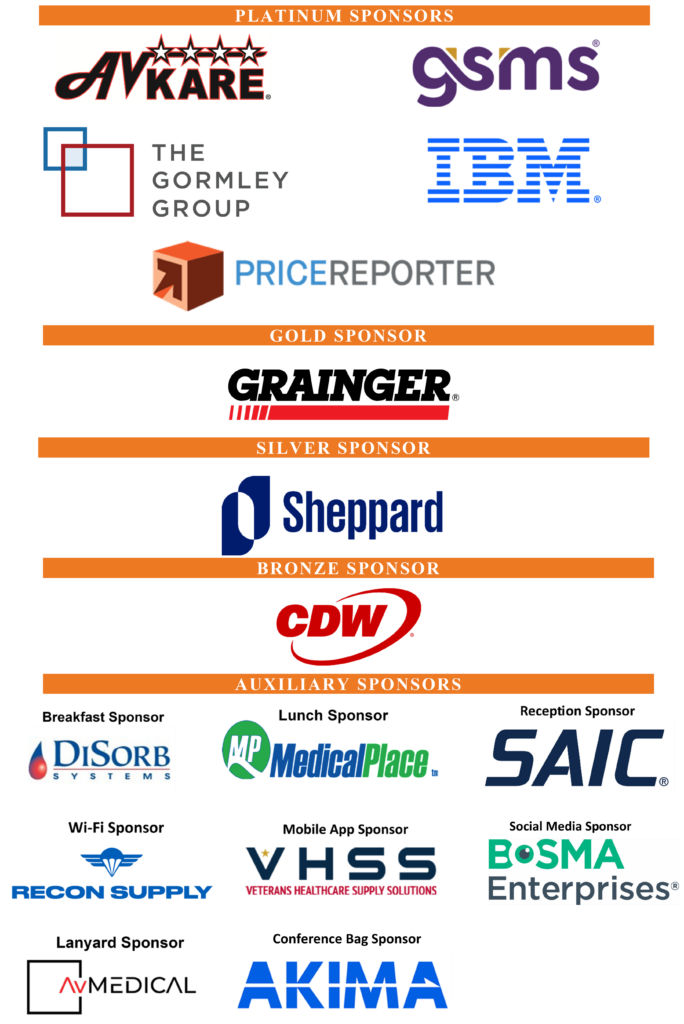
Thank You to Our Current Spring Training Conference Sponsors!
Executive Order Strengthens Oversight of “Made in America” Claims
On March 13, the President issued an Executive Order, “Ensuring Truthful Advertising of Products Claiming to be Made in America,” aimed at strengthening enforcement of Made in America claims. The order directs agencies to take the following actions:
- Directs the Chairman of the Federal Trade Commission (FTC), where appropriate, to prioritize enforcement actions involving false or misleading “Made in America” claims;
- Calls on the FTC to consider regulations establishing that a failure by online marketplaces to verify country-of-origin claims may constitute an unfair or deceptive act or practice under the FTC Act;
- Encourages agencies with oversight of country-of-origin labeling to consider regulations promoting voluntary “Made in America” labeling and consistent guidance for industry; and
- Requires agencies overseeing governmentwide acquisition contracts, including Multiple Award Schedules and other indefinite delivery, indefinite quantity contracts, to periodically review and verify “Buy American” and similar country-of-origin claims for products acquired through these vehicles.
GSA Updates MAS Refresh 31, Extends AI Clause Comment Period
On March 19, the General Services Administration (GSA) released an update to MAS Refresh 31, outlining key changes to planned updates and timelines.
Most notably, GSA confirmed that it will not include the proposed AI clause (GSAR 552.239-7001) in Refresh 31. In response to industry feedback, the public comment period for the clause has been extended to April 3, 2026, with consideration for inclusion in Refresh 32.
GSA also added a note regarding Special Item Numbers( SIN) 311423 (Non-Perishable Foods), indicating that no new offers or modifications will be accepted for this SIN after Refresh 31 is issued, and the SIN will be retired under Refresh 32.
Additionally, GSA reiterated that all new offers submitted after Refresh 31 will be required to follow the Transactional Data Reporting (TDR) format and encouraged contractors that have not yet transitioned to begin preparing accordingly.
Further details on Refresh 31 will be provided as they become available.
GSA Highlights Role of New Acquisition QSMO
The General Services Administration (GSA) released a blog outlining the purpose of the new Governmentwide Acquisition Shared Services and Solutions Quality Service Management Office (QSMO). The office was established to improve coordination, transparency, and efficiency across federal procurement systems and related services.
QSMOs, as defined in the Office and Management (OMB) Memorandum M-19-16, establish and manage governmentwide marketplaces for common mission support capabilities. QSMOs set business standards, evaluate providers, monitor performance, and support agencies in adopting shared solutions to improve efficiency and interoperability.
The new QSMO at GSA will work with OMB and agencies to:
- Define a marketplace-based operating model to reduce duplicative business services and technology investments across agencies;
- Establish and promote common business and data standards for acquisition systems and shared services;
- Monitor provider performance and support continuous improvement;
- Consolidate demand toward vetted, standards-based acquisition shared services and solutions where appropriate; and
- Align marketplace offerings with federal acquisition policy and governance processes.
GSA and NIST Partner to Strengthen AI Evaluation Across Government
On Wednesday, GSA and the National Institute of Standards and Technology’s (NIST) Center for AI Standards and Innovation announced a joint effort to strengthen how the federal government evaluates artificial intelligence (AI) models and services.
The partnership will support USAi, GSA’s secure AI platform for the federal workforce, by developing more consistent approaches to testing and measuring AI systems prior to deployment. The effort aligns with the Administration’s broader focus on advancing AI adoption across government.
Through the collaboration, NIST will provide tools and guidance to help evaluate advanced AI models, including benchmarking, testing methodologies, and practical resources such as evaluation guidelines and checklists. The initiative aims to help agencies adopt AI more quickly, securely, and with greater confidence while reducing duplication and costs.
Lawmakers Consider AI Governance Updates for FY26 NDAA
NextGov reports that Sen. Mark Kelly (D-AZ) discussed efforts to update governance of AI in military operations during remarks at the Brookings Institution. Kelly indicated that he and other lawmakers are evaluating how existing frameworks address the use of advanced AI alongside warfighters, with the goal of informing potential updates in the 2027 National Defense Authorization Act (NDAA) to the AI governing provisions introduced in the fiscal year 2026 NDAA.
Kelly noted that rules of engagement evolve over time and suggested that similar updates may be needed for AI use in military contexts. He also acknowledged that operational demands may require flexibility, including potential exceptions to maintaining a human in the loop for certain autonomous systems.
Additionally, Kelly emphasized the importance of early coordination between contractors and agencies on the use of advanced technologies, noting that expectations around appropriate use should be established “up front.”
OASIS+ Phase I Awards Complete; Phase II Evaluations Underway
GSA announced that all Phase I awards under the OASIS+ program have been finalized, including the resolution of all associated protests. The completed awards close out the first wave of offers received in October 2023 and mark a significant milestone for the program.
The program is now actively evaluating proposals submitted under Phase II, with solicitations remaining continuously open. GSA noted that future Phase II awards will be announced through SAM.gov and the OASIS+ website. Updated information, including FAQs, is available on the OASIS+ Solicitations (Continuously Open) page.
Army MAPS Listening Session Materials Now Available
Slides from last week’s Army MAPS listening session are now available, along with materials from the January 28 Army Contracting Command – Aberdeen Proving Ground (ACC-APG) Industry Update and MAPS Industry Day. The Q&A from the Industry Update has also been posted, with responses from the MAPS Industry Day expected at a later date.
The Army released Draft 5 of the MAPS Request for Proposals (RFP) following its review of industry feedback and continued refinement of the acquisition strategy.
The updated draft revises Sections C, H, L, and M of the solicitation, including updates to evaluation criteria, past performance evaluation, and price evaluation factors.
View the materials and draft RFP here.
GSA Report Highlights Acquisition’s Role in Section 508 Compliance
A recent assessment released by GSA found that many federal agencies continue to face challenges meeting accessibility requirements under Section 508 of the Rehabilitation Act, while highlighting acquisition as a key lever for improving compliance.
The report, which analyzed data from 212 federal agencies and components, found that governmentwide conformance remains limited. According to the assessment, only 37 percent of the most-visited federal websites are fully compliant with Section 508 standards, and fewer than half of agencies’ most-used information and communication technologies (ICT) meet accessibility requirements.
The assessment also found that while agencies frequently include Section 508 requirements in contracts, they do not consistently verify or enforce vendor compliance. To address this gap, GSA recommends strengthening acquisition practices, including evaluating vendor accessibility claims through Accessibility Conformance Reports (ACRs) and incorporating accessibility performance into contract evaluations and award decisions.
GSA also announced the development of a beta ACR repository to centralize vendor accessibility data and support agency procurement and risk management decisions.
Navy Plans SBIR and STTR Updates to Accelerate Innovation
Federal News Network reports that the Department of the Navy has spent the past six months evaluating updates to the Small Business Innovation Research (SBIR) and Small Business Technology Transfer (STTR) programs during a lapse in authorization. These programs support innovative research by small businesses aligned with agency missions.
Andrew Magliochetti, Director of Small Business Programs for the Navy, indicated that the department plans to centralize SBIR and STTR contract execution within a center of excellence to improve efficiency. The Navy’s internal review found that approximately 70 percent of SBIR/STTR actions were already executed in a centralized location, with the remaining 30 percent dispersed across the department.
The planned changes are intended to accelerate program timelines, increase award sizes, and deliver capabilities to the fleet more quickly. Magliochetti also noted a broader focus on scaling efforts and incorporating private capital to support innovation and commercialization. Additional details on the initiative are expected in the coming weeks.
Congress recently passed a compromise bill that would extend the programs through fiscal year 2031 if signed by the President.
CISA Delays CIRCIA Activities Amid DHS Funding Lapse
The Cybersecurity and Infrastructure Security Agency (CISA) announced that activities related to the Cyber Incident Reporting for Critical Infrastructure Act (CIRCIA), including planned town halls, have been delayed due to a lapse in appropriations affecting the Department of Homeland Security (DHS).
CIRCIA establishes cyber incident reporting requirements for covered entities, including most medium and large businesses, as well as small businesses operating in 16 designated critical infrastructure sectors. The requirements include reporting “major cyber incidents” within 72 hours and ransom payments within 24 hours.
CISA had scheduled a series of virtual town halls from March through early April to gather feedback on the rulemaking. These sessions have been postponed, and CISA will announce a revised schedule once DHS reopens. The agency also noted that the delay may impact the timeline for issuing the final rule.
Air Force Launches Effort to Modernize Acquisition Platform
Washington Technology reports that the Air Force has launched an effort to modernize the technology environment used by its acquisition workforce through a new initiative, LaunchPad 2.0. The platform will be the successor to the current LaunchPad system and will expand support beyond engineering users to include the full acquisition lifecycle, such as program management and logistics.
According to a recent sources sought notice, LaunchPad 2.0 will be a cloud-based platform designed to provide secure, centralized access to commercial software, data, and collaboration tools. The Air Force expects the platform to support an initial 4,000 users, with plans to increase to as many as 80,000 users by 2030.
Key capabilities under consideration include operation at both the secret and controlled unclassified information levels, integration with enterprise systems, rapid software deployment timelines, and support for AI, data sharing, and cross-domain collaboration. Responses to the request for information are due April 7.
OMB Updates Internal Control Guidance for Federal Agencies
OMB issued updated guidance directing federal agencies to take greater ownership of internal controls and risk assessments, according to MeriTalk. The policy reflects a shift away from reliance on external entities “whose views are not binding on the Executive Branch,” such as the Government Accountability Office (GAO).
OMB stated that prior reliance on external oversight contributed to “documented examples of widespread abuse” and did not sufficiently prioritize agency-led internal control processes. The updated guidance establishes minimum requirements for agencies under the Federal Managers’ Financial Integrity Act, including annual assessments of internal controls and reporting of material weaknesses and corrective actions.
The policy also clarifies that GAO’s Standards for Internal Control in the Federal Government (the “Green Book”) serves as a reference but is not binding, and that OMB is responsible for setting agency control requirements.
Under the revised framework, agencies must structure their internal control efforts across five components, including control environment, risk assessment, control activities, information and communication, and monitoring. The update took effect upon its publication on March 10.
Federal Agencies Access New HR Shared Service Center Through OPM
Federal News Network reports that the Office of Personnel Management (OPM) has launched a new human resources (HR) shared service center, offering agencies a voluntary, fee-for-service option to modernize and consolidate HR functions. The center provides vetted information technology (IT) tools and services for core functions, including payroll, benefits, onboarding, and performance management, along with strategic support such as workforce planning.
OPM says the initiative supports the Administration’s push to reduce inefficiencies and duplication across decentralized HR systems, with a long-term goal of consolidating 119 HR IT platforms into a single system. Agencies can join through interagency agreements, with implementation expected within six months. Early participants include the Department of Housing and Urban Development, the Department of Veterans Affairs Office of Inspector General, and the Office of Government Ethics.
The initiative signals continued momentum toward centralized, technology-driven HR modernization across the federal government.
Legal Corner: GSA’s New Proposed “American AI” Clause for Schedule Contracts: What Contractors Need to Know
The Legal Corner provides the procurement community with an opportunity to share insights and comments on Legal issues of the day. The comments herein do not necessarily reflect the views of The Coalition for Common Sense in Government Procurement.
Authored by Ryan Roberts & Townsend Bourne; Sheppard Mullin
Note: In response to industry feedback, the public comment period for the clause has been extended to April 3, 2026, with consideration for inclusion in Refresh 32.
On March 6, 2026, GSA dropped a surprising new proposed GSAR clause it plans to roll into GSA Schedule contracts in the next MAS refresh (Refresh 31, expected late March or April). The clause—GSAR 552.239-7001, “Basic Safeguarding of Artificial Intelligence Systems”—is a big deal for any contractor selling through the Schedules program, and potentially for their subcontractors and “service providers,” too.
GSA released the proposed clause via the Schedule refresh comment process—not through traditional notice-and-comment rulemaking. Thus, there is a very short window to submit feedback—GSA is accepting comments on the proposed clause only through March 20, 2026 (either in the “comments” section of the webpage or to the MAS Program Management Office email (maspmo@gsa.gov)).
This proposed clause builds on a series of laws, Executive Orders, internal policies, and agency guidance, including OMB Memo M-25-22 (Efficient Acquisition of AI in Government; we wrote about it here). It is the latest step in a multi-year federal push to regulate AI procurement and steer agencies toward “American AI Systems”—generally, AI developed and produced in the United States. The proposed GSAR clause would do precisely that—ensure that contractors only use American AI. But, of course, there’s more—the proposed clause also includes multiple compliance obligations for Schedule contractors.
The clause includes the following key compliance requirements for Schedule contractors:
- Use only “American AI Systems” in the performance of any GSA Schedule orders
- Disclose all AI systems used in performance (whether American or foreign)
- Enable human oversight by government officials
- Report any incident (as defined by FISMA) within 72 hours and provide daily status updates
- Provide a mechanism for government feedback
- Provide (upon government request) documentation demonstrating compliance with the clause, including system documentation consistent with the NIST AI Risk Management Framework
Significantly, the clause explicitly states the contractor is responsible for its AI “Service Provider(s),” with “Service Provider” defined as “an entity that directly or indirectly provides, operates, or licenses an AI system but is not a party to the contract. Service Providers may or may not be subcontractors.” (Emphasis added.) Therefore, it appears the substantive compliance obligations extend to indirect use of AI in developing a product or service used in performance of the contract.
Even when using American AI, the proposed GSAR clause includes material restrictions in how a contractor (and/or its Service Provider(s)) uses that AI. There’s a lot to unpack here, but below are some highlights:
- The Government owns all Custom Development of the AI System (defined to include modifications, customizations, configurations, or enhancements both to the AI System and any associated implementations or workflows). Practically, this means that the Federal Government is claiming ownership of both the contractor’s code written to implement the use of American AI, as well as any underlying modifications to the American AI Service Provider’s code, if done specifically for the Government under the GSA Schedule order.
- The contractor and Service Provider are prohibited from using Government Data (another defined term) to train or improve the AI/ML model.
- The contractor and Service Provider are required to segregate Government Data from commercial customers, delete all Government Data upon the conclusion of the Federal contract, and provide a written certification of deletion.
- The contractor must make “commercial efforts” to ensure the Service Provider’s AI System follows “Unbiased AI Principles.” This provision may require contractors to renegotiate their commercial agreements with American AI Service Providers.
- The proposed clause requires that the license provided by the contractor to the Government permit the Government to use the AI System “for any lawful Government purpose.”
- The contractor must notify the Government of certain changes to AI System(s) and/or Service Providers used in performance of the contract.
- The Government may suspend use of an AI System for “performance issues.”
- The contractor is liable for reasonable decommissioning costs if the Government elects to termination the contract for a failure to comply with the “Unbiased AI Principles.”
The proposed clause states it takes precedence over any other conflicting provision, including the contractor’s commercial terms (such as those in its Terms of Service or End User License Agreement). This is a departure from GSA’s approach over the past decade or so, where GSA has given contractors significant flexibility and made a concerted effort to match commercial software terms, where not prohibited by statute. However, note the proposed clause allows for the parties to “bilaterally supplement or revise” certain sections of the clause (including the IP restrictions)—contractors should be mindful of this and seek to obtain important revisions where possible. Unfortunately, that negotiation flexibility does not extend to the six compliance obligations highlighted above.
GSA is clearly signaling where it wants the Schedules program to go on AI. The question for contractors is whether they can operationalize these new requirements and prohibitions quickly—and whether the final clause will acknowledge how AI is actually built, licensed, and managed in modern software environments. To prepare, contractors should begin inventorying their AI use (both direct and indirect); confirm whether the AI tools they use may qualify as “American AI;” review and prepare for needed updates to subcontract/Service Provider terms; and build incident reporting, segregation/deletion, and documentation processes. And certainly don’t miss the opportunity to provide substantive comments prior to March 20.
IT is not a Commodity: Delivering Mission Value Through the Federal Supply Chain
Authored by Tony Celeste, Executive Director & General Manager; Ingram Micro Public Sector LLC
The comments herein do not necessarily reflect the views of The Coalition for Common Sense in Government Procurement.
Executive Summary:
IT is not a commodity. Almost every solution requires integration, compliance, and mission alignment. Policymakers and acquisition leaders are increasingly treating information technology as if it were interchangeable commercial goods, like pens or paper. Some of this thinking has its roots in category management, which groups diverse IT offerings together and assumes they are essentially the same. This oversimplification is reflected in efforts such as OMB and GSA’s pursuit of centralized price negotiations and centralized acquisition initiatives. These efforts are based on a false assumption that intermediaries such as distributors, Information Technology Value-Added Resellers (ITVARs), and systems integrators add limited advantage, while charging significant markups that only drive higher long-term costs.
Read the full article here.
Off the Shelf: The Factors Driving Acquisition Reform
Moshe Schwartz, Coalition Defense Fellow and President of Etherton & Associates, joined Off the Shelf to discuss the evolving geopolitical landscape and how it is shaping defense acquisition policy reform.
During the discussion, Schwartz shares insights on:
- Geopolitical pressures driving changes in defense acquisition policy
- Procurement, logistics, and supply chain challenges affecting the United States Department of War’s acquisition operations
- Under-the-radar provisions in the NDAA impacting defense acquisition
- The Department of War’s readiness challenge and key management changes aimed at improving readiness
Listen to the full podcast here.
Briefing on GSA’s Office of Centralized Acquisition Services, March 26
The Coalition for Common Sense in Government Procurement (Coalition) is pleased to host an all-member meeting with Tom Meiron, GSA Assistant Commissioner of Centralized Acquisition Services, on March 26 at 10:00 AM (ET). During the meeting, Tom will discuss the priorities and initiatives from GSA’s new Office of Centralized Acquisition Services (OCAS).
OCAS was established to modernize how federal agencies buy commonly used products and services. Through an enterprise-wide approach, OCAS aims to reduce duplication, lower costs, and maximize the government’s buying power, supporting key acquisition solutions such as the GSA Multiple Award Schedule and OASIS+.
The meeting will take place at CACI, 12021 Sunset Hills Rd. Reston VA, 20190. Virtual attendance is also available.
GSA is collecting member questions in advance of the meeting to help guide the discussion. Please send your questions to Michael Hanafin at mhanafin@thecgp.org.
To register, click here. For assistance with registration, please contact Mady Whiting at mady.whiting@thecgp.org
Note: This is a members-only event. If you see a message that states “Registration Not Available,” please log in using your member account.
Cyber Update, April 8
The Coalition’s Cyber & Supply Chain Security Committee will host a meeting on the latest updates on federal cybersecurity policy developments and what they mean for contractors. Our guest speakers will be committee co-chairs Townsend Bourne, Partner at Sheppard Mullin, and Michael Gruden, Partner at Crowell & Moring. The meeting will be held virtually on April 8 at 12:00 PM (ET).
To register, click here. For assistance with registration, please contact Mady Whiting at mady.whiting@thecgp.org.
Note: This is a members-only event. If you see a message that states “Registration Not Available,” please log in using your member account.
Update from GSA’s Office of Professional Services & Human Capital Categories, April 14
The IT/Services Committee will host an update from GSA’s Office of Professional Services & Human Capital Categories (PSHC) on April 14 at 10:00 AM (ET), featuring invited speakers, Sheri Meadema, PSHC Assistant Commissioner, and Adam Soderholm, Director of the Center for Professional Services. During the discussion, Sheri and Adam will provide an overview of the latest priorities and initiatives, as well as insights into ongoing efforts affecting the Professional Services and Human Capital Categories and the broader federal acquisition landscape.
The meeting location is TBD. Virtual attendance will also be available. To register, click here. For assistance with registration, please contact Mady Whiting at mady.whiting@thecgp.org
If you have any additional topics or questions you would like addressed at the meeting, please email Joseph Snyderwine at JSnyderwine@thecgp.org.
Note: This is a members-only event. If you see a message that states “Registration Not Available,” please log in using your member account.